"Storytelling Under the Winter Moon" for Yakima Herald Explore
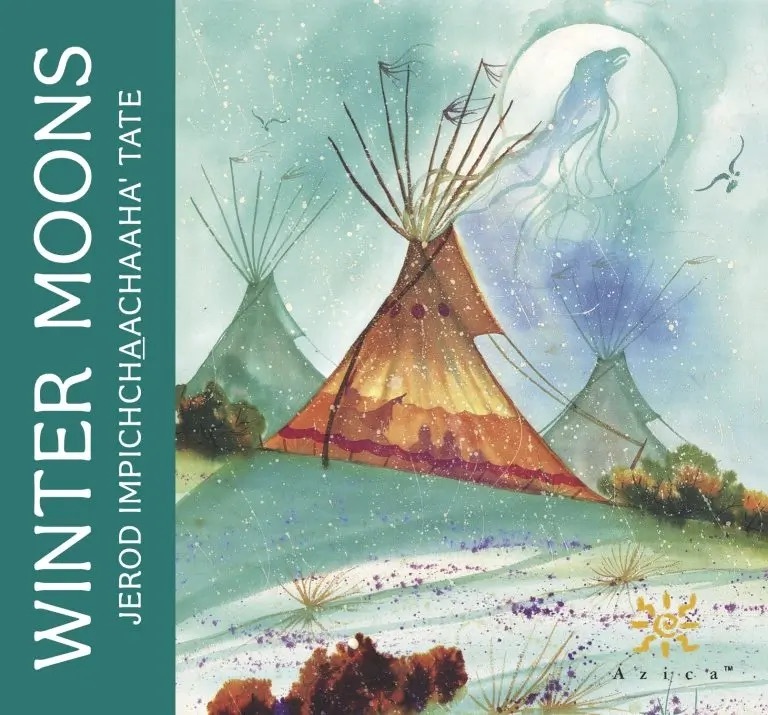

On Saturday, January 31 at the Capitol Theatre, the Yakima Symphony Orchestra presents Winter Moons and Appalachian Spring, a program that celebrates storytelling and dance through music, in partnership with the Yakima School of Ballet. The two titular pieces on the program, Jerod Impichaachaaha’ Tate’s Winter Moons and Aaron Copland’s Appalachian Spring, both use ballet to share their own stories.
Appalachian Spring follows a young pioneer couple preparing for their wedding in the Pennsylvania hills. Its open, airy harmonies evoke sunlight, fields, and the quiet optimism of a new life beginning. In Tate’s ballet Winter Moons, each of its four movements are based upon American Indian legends from the Northern Plains and Rocky Mountain, accompanied by a live storyteller who guides the audience. The composer himself, Jerod Impichaachaaha’ Tate, will be our narrator at the concert.
Tate, an enrolled member of the Chickasaw Nation in Oklahoma, is dedicated to the development of American Indian classical music composition. Winter Moons was his first-ever composition, commissioned by and dedicated to his mother, choreographer Dr. Patricia Tate, and premiered on February 18, 1992. Native American actor Rodney Arnold Grant of the Omaha tribe (best known for his role as “Wind In His Hair” in the 1990 film Dances with Wolves) was the narrator for the premiere. Grant played a significant role in Tate’s career as a composer.
About Grant, Tate says—
“While forging our new friendship, he insisted that I become a Chickasaw classical composer. I had my doubts and insecurities, this being my first attempt at expressing Native identity through classical music. His intolerance to my hesitations became fuel for my life-long mission of contributing symphonic repertoire to North American Indian modern art. To this day, Rodney and I are dear friends and my heart holds the deepest gratitude for his belief in me.”
According to Tate, the title of Winter Moons is derived from the ancient idea that “American Indian stories—some serious historical narratives, and others lighthearted bedtime stories for children, but all usually carrying a moral—are best told during the full moons of the wintertime.” Countries and cultures around the world have full moon traditions that involve harvest festivals, spiritual rituals, celebration, and the practice of mindfulness in connection to the lunar cycle. They also independently created myths, fables, and rituals based on the moon and its monthly cycle around the earth.
Tate’s ballet weaves together stories about Puberty Blessing Songs, a rite of passage for young Lakota women; the Indian spirit at Mesa Falls, a tragic Shoshone tale of two lovers getting swept away by a waterfall; the Medicine Wheel, in the Big Horn Mountains of Wyoming, a place of great importance to Northern Plains Indians; and the Pend d’Oreilles legend of Bitterroot Valley, when an old woman cried upon the earth during a famine and her tears formed the roots of a new plant, a bitter edible blossom that fed her people.
The Native American storytelling tradition is one that was shared throughout the continent, across tribes, and we are lucky to have a record of this rich tradition that was primarily passed down from generation to generation orally. Many tribes have similar traditions of gathering in a winterlodge during the cold winter months to be warm and eat together. During these times, tribal elders would be the ones to share the legends and myths of their people.
As the Yakima Symphony Orchestra prepares for our concert that celebrates these cultural practices, we acknowledge that our performances are hosted on the ancestral lands of the Confederated Tribes of the Yakama Nation, whose deep connection to this region endures to this day. The Yakama Nation shares similar traditions to those that Tate sourced his inspiration for Winter Moons from.
Legends local to the area and the Yakama Nation include mythical histories about our surroundings and environments, from the origins of the salmon, huckleberries, and bears, to that of Mount Adams, the mountain sacred to the Yakamas, and called Pahto. On clear days, Pahto towers over the Lower Valley, and it represents the ways of the past, as well as the strength of the Yakamas who forged a great Nation in spite of years of adversity.
The next full moon will be on the first of February, one day after the Symphony’s Winter Moons & Appalachian Spring concert. Whether you spend some time revisiting stories from your own upbringing or taking a moment to reflect inwardly, we hope the stories presented to you on January 31 will inspire you to take part in your own full moon rituals.
Tickets at YSOmusic.org. For more information, call 509.248.1414.
—Ella Kim